
DataStealth neutralizes sensitive data at the source and replaces it with secure, format-preserving tokens that hold no exploitable value. Even if attackers break in, there’s nothing worth stealing.


Databases and file shares are prime targets. At-rest encryption only buys time – stolen ciphertext today could be decrypted tomorrow.

TLS protects the pipe, not the payload. Once data lands in a SaaS app, partner system, or microservice, it’s in the clear.

Juggling point tools for databases, file shares, and flows leaves gaps everywhere. Hybrid estates demand unified protection, not fragmented patches.
DataStealth isn’t another layer. It’s a data-centric architecture that renders sensitive data worthless before it becomes a liability.

Replace live PII/PHI/PCI with valueless, format-preserving tokens. Unlike encryption, tokenization is non-mathematical and keyless, inherently resistant to brute force and future threats.
Safeguard data in any app, database, or file store – including legacy/mainframe – without touching source code or breaking schemas.
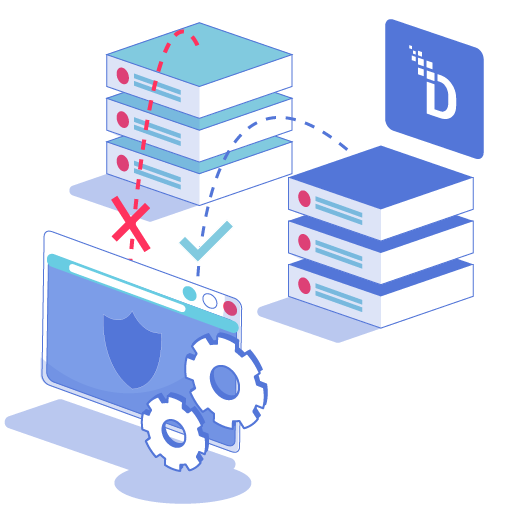

Apply one consistent control for data in motion and at rest across on-prem, multi-cloud, and legacy. Prove PCI and privacy compliance by design.

A leading insurer needed a U.S. SaaS platform but refused to let customer PII leave its jurisdiction.

DataStealth tokenized all sensitive data in-line before it reached the vendor. The SaaS ran normally, processing tokens, not real PII.

Best-in-class SaaS, zero exposure risk. Auditors confirmed no PII was ever at rest with the vendor – compliance assured, breach liability eliminated.
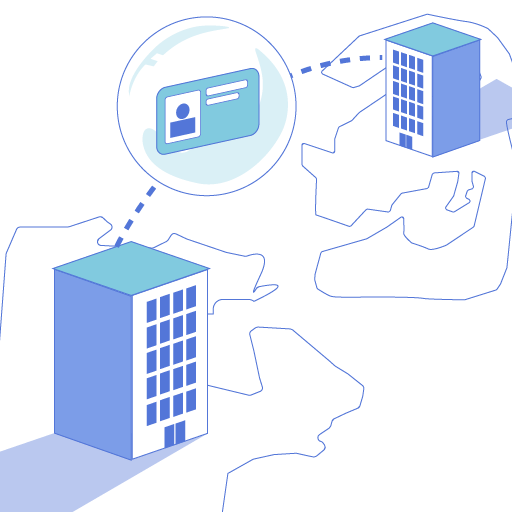
Intercept HTTP, SFTP, and database flows and protect sensitive fields before they leave your control.

Identify PII/PHI/PCI in real time and replace with format-preserving tokens – applications continue to function.

Apps and databases store/process tokens only. Even a full system compromise yields nothing useful.
Traditional security protects the perimeter – i.e., firewalls, network segmentation, VPNs. The problem is that once an attacker breaches the perimeter, all the data inside is exposed in clear text.
Data-centric security flips the model. Instead of protecting the infrastructure around data, it protects the data itself – applying tokenization, masking, or encryption at the field level so sensitive values are neutralized before they ever reach a database, file share, or SaaS application.
The result: even a full system compromise yields nothing useful. Tokenized data has no mathematical path back to the original – making data breaches operationally irrelevant rather than catastrophic.
Encryption transforms data into ciphertext using a cryptographic key. It's reversible by design – anyone with the key (or who compromises the key) can decrypt the data. Worse, ciphertext stolen today can be stored and decrypted later as computing power advances – a threat known as "harvest now, decrypt later".
Tokenization replaces data with valueless surrogates that have no mathematical relationship to the original. There is no key to steal, no algorithm to reverse, and no ciphertext to brute-force – today or in a quantum computing future.
For PCI DSS compliance, tokenization has an additional advantage – tokenized data falls outside audit scope entirely, while encrypted cardholder data does not. This is why tokenization is the preferred method for PCI scope reduction in enterprise environments.
DataStealth sits inline at the protocol layer – intercepting HTTP, SFTP, JDBC, ODBC, and other protocol traffic as it flows between applications, databases, and external systems.
Sensitive fields are identified in real time through classification and replaced with format-preserving tokens before data reaches its destination. Because tokens retain the original format and length, downstream applications continue to function without code changes – joins, deduplication, and analytics all work as expected.
The platform deploys across on-premise, cloud, and hybrid environments from a single policy engine, ensuring consistent protection regardless of where traffic originates.
Nothing useful. That's the point.
Tokens are valueless surrogates – they contain no sensitive information, no cryptographic material, and no mathematical path back to the original data.
An attacker who exfiltrates a database of tokens gets a collection of format-compliant but meaningless values – e.g., a 16-digit string that passes Luhn validation but maps to no real credit card.
This fundamentally changes the breach risk equation. Under GDPR and HIPAA, tokenized data may not even trigger notification requirements – because no personal data was compromised.
Under PCI DSS, tokenized systems are excluded from the cardholder data environment, reducing the blast radius of any incident to near zero.

Get expert answers on deploying DataStealth at enterprise scale, without performance trade-offs or rewrites.
SCHEDULE My Session