
Reducing breach impact starts with the right data protection strategy. Learn what’s best for you - and why.
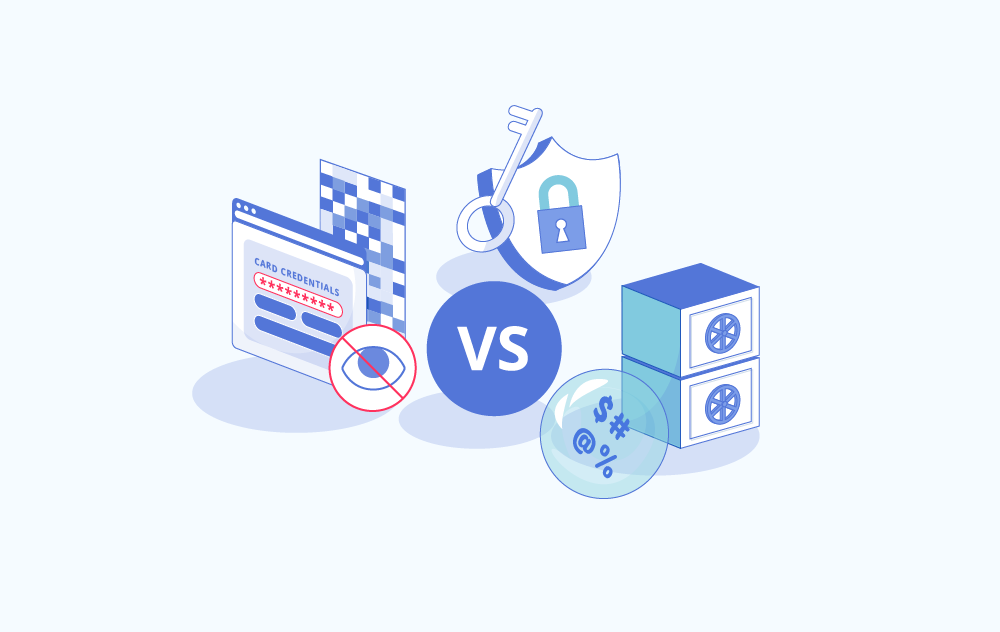
Tokenization, encryption, and data masking all protect sensitive data, but they do it in fundamentally different ways. Understanding when to use each (and when not to) is critical for reducing breach impact, meeting compliance requirements, and securing data across cloud, hybrid, and legacy environments.
Tokenization, encryption, and masking each have a role but they are not interchangeable.
In this article, we’ll break down each three with examples of how they are used and which is best for your organization’s approach to data protection.
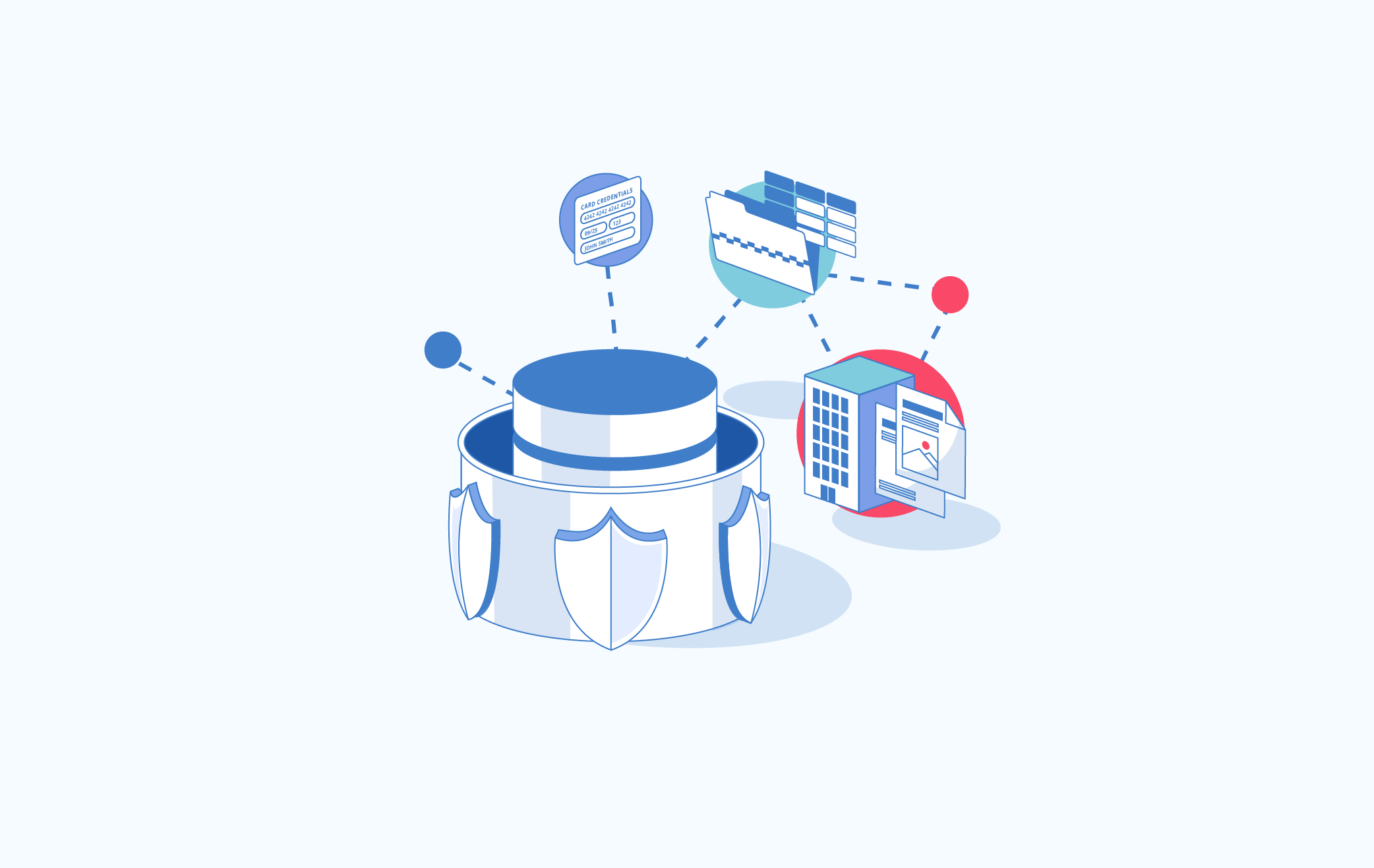
Tokenization replaces sensitive data (e.g., credit card numbers, SSNs, PHI) with a non‑sensitive placeholder value called a token. The original data is stored securely in a separate vault, and the token has no mathematical relationship to the original value.
Key characteristics:
Example:
4111 1111 1111 1111 → TKN‑93F8‑XQ12
If a database is breached then attackers only get tokens, not usable data.
Encryption transforms data using a cryptographic algorithm and key. Encrypted data can be decrypted back to its original form by anyone with the correct key.
Key characteristics:
Example:
4111 1111 1111 1111 → X9$kL!2@pQ… (ciphertext)
If attackers obtain both the encrypted data and the key, the data is exposed.
Data masking hides portions of sensitive data, typically for display or testing purposes. The original data usually still exists in the database.
Key characteristics:
Example:
4111 1111 1111 1111 → **** **** **** 1111
Masking reduces exposure but does not remove sensitive data from systems.
Use tokenization when you want to:
Common use cases:
Encryption is ideal for: - Data in transit (TLS, HTTPS) - Full disk encryption - Secure backups - Regulatory baseline requirements
However, encryption alone does not:
Masking works well for:
Masking should not be relied on as your primary data protection control.
Traditional security models assume you can prevent every breach. Modern reality says otherwise.
Tokenization flips the model: Even if attackers get in, the data is worthless.
This is especially important for:
By removing sensitive data from systems entirely, tokenization dramatically reduces breach impact.
Many organizations still rely on mainframes, AS/400 systems, legacy ERPs, and on‑prem databases.
Rewriting these systems is expensive and risky.
Modern tokenization platforms can:
This is where DataStealth is particularly strong.
DSPM tools focus on discovering and monitoring sensitive data.
Tokenization focuses on neutralizing sensitive data.
Many organizations use both, but tokenization is the control that actually changes outcomes.

Bilal is the Content Strategist at DataStealth. He's a recognized defence and security analyst who's researching the growing importance of cybersecurity and data protection in enterprise-sized organizations.