

Shrink PCI scope, eliminate eSkimming risk, and future-proof your payments with a single, agentless data security platform built for modern retailers.
Schedule a DemoRetailers are expected to innovate fast while managing sprawling environments: eCommerce sites, loyalty programs, and third-party processors. Each creates compliance headaches and new opportunities for attackers.

Legacy billing and other systems can’t be rewritten or patched with agents, leaving cardholder data in cleartext and widening your risk surface.

Every new transaction, channel, or store expands PCI scope, forcing audits that drain resources and stall growth.

JavaScript skimming attacks (Magecart, formjacking) target your eCommerce sites, stealing credentials in real-time and eroding customer trust.
DataStealth isn’t just another PCI checkbox. As a PCI SSC Board of Advisors member, we help shape the standards – and deliver practical solutions that cut scope, cost, and risk while unlocking massive ROI.

Eliminate breach exposure by intercepting and tokenizing PANs in-flight, before they ever touch your systems.
Protect 100% of pages, 100% of the time. Block Magecart and formjacking in real time, with zero code changes.


Reduce PCI scope by up to 90%, slash audit time and cost, and free resources for growth initiatives.
Seal off payment forms from injection attacks across all browsers and TPSPs, safeguarding customer trust at checkout.

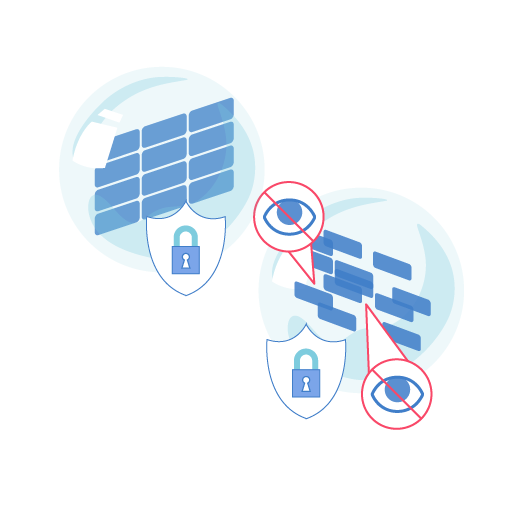
Rapidly uncover forgotten or hidden card data with data discovery to close compliance gaps and eliminate costly blind spots.

A global loyalty platform managing 1B+ member accounts and processing 92B+ annual transactions needed to eliminate exposure to credit card data and reduce PCI audit scope – without rewriting apps or altering legacy systems.
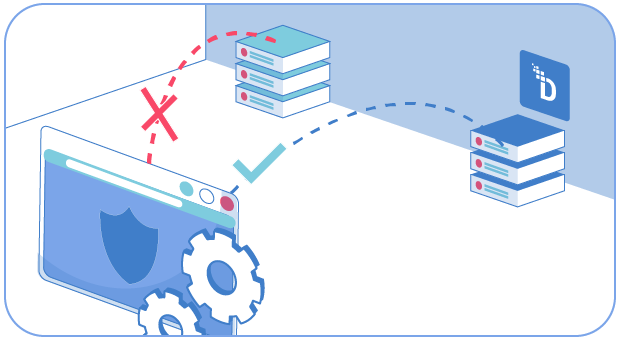
DataStealth was deployed transparently at the network layer. Sensitive data like card numbers is intercepted before entering the environment, replaced with secure tokens, and vaulted. Real data is restored only at the bank for processing.
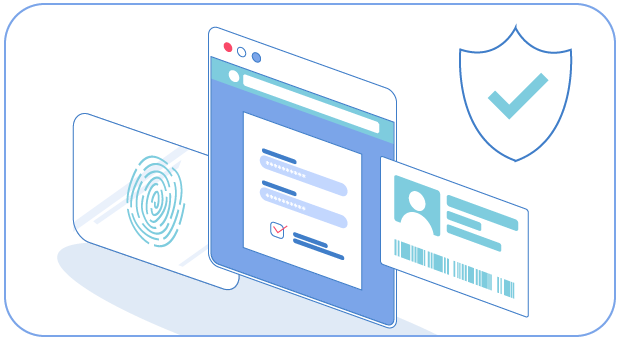
The provider removed all cardholder data from its systems, cut audit time by 50%, and gained a seamless, compliance-ready infrastructure. The biggest benefit: peace of mind knowing loyalty members’ financial data is never at risk.
DataStealth turns compliance into a competitive advantage, enabling innovation while keeping customer trust intact.

Tokenize and mask PII in loyalty apps and rewards databases to protect against account takeovers and insider threats.

Safely share customer data with delivery services, marketplaces, and global partners – while ensuring only anonymized or tokenized data leaves your environment.

Gain processor portability. Independent tokenization lets you switch payment providers without lock-in, lowering costs and scaling globally.

Rapidly identify forgotten or unknown card data with Payment Card Discovery, closing blind spots and reducing breach exposure.

Keep PII and card data in-region (e.g., EU, Canada) while still using US-hosted SaaS. De-tokenization ensures compliance with residency laws.
Tokenize PII before sending to cloud personalization or analytics tools, enabling AI-driven insights without privacy risk.

This isn’t a generic demo. It’s a working session with our PCI experts and senior architects – where you’ll walk away with:
• A clear roadmap to reduce PCI scope by up to 90%
• An actionable plan to block eSkimming and payment form attacksA
• A strategy to cut compliance costs while enabling omnichannel growth

Under PCI DSS, every system that stores, processes, or transmits cardholder data falls within the Cardholder Data Environment (CDE) – and every CDE system is subject to assessment. For a retailer with eCommerce sites, POS systems, loyalty databases, and partner integrations, that scope can be enormous.
Payment tokenization removes systems from the CDE by replacing PANs, cardholder names, and CVVs with format-preserving tokens before they reach downstream systems. Since tokens are not cardholder data, the systems that process them are excluded from scope.
DataStealth applies tokenization in-flight – i.e., at the protocol layer before data reaches databases, SaaS applications, or test environments. The result: up to 90% scope reduction, faster SAQ A eligibility, and dramatically lower audit costs.
For a detailed comparison, read PCI Scope Reduction: Tokenization vs Network Segmentation.
eSkimming – also called Magecart, formjacking, or digital skimming – is an attack where malicious JavaScript is injected into an eCommerce checkout page to steal payment card data as customers type it. The script captures PANs, CVVs, and cardholder names in real time and exfiltrates them to attacker-controlled servers.
PCI DSS v4.0 Requirements 6.4.3 and 11.6.1 were introduced specifically to address this threat – mandating that organisations inventory and monitor all scripts on payment pages and detect unauthorised changes.
DataStealth provides continuous, inline eSkimming protection that works without injecting scripts of its own. Because DataStealth operates at the network layer, it intercepts and neutralizes malicious payloads before they reach the customer's browser – covering 100% of pages, 100% of the time. For QSAs evaluating compliance, read QSAs: PCI DSS 6.4.3 and 11.6.1 Compliance.
Loyalty programmes are high-value targets – they contain PII (names, emails, addresses, phone numbers), payment card data, purchase history, and often enough identity information to enable account takeover fraud.
DataStealth protects loyalty data by tokenizing sensitive fields in-flight before they enter loyalty databases, rewards engines, or partner systems. Format-preserving tokens maintain the structure needed for loyalty operations – points calculations, tier qualifications, and personalization all continue working normally.
For loyalty data shared with delivery services, marketplaces, or offshore support teams, dynamic masking ensures partners see only the fields they need – e.g., order details without payment information, customer names without home addresses. This eliminates third-party data exposure while maintaining operational efficiency.
PCI DSS v4.0 introduced several requirements that directly affect retailers – the most impactful being Requirements 6.4.3 and 11.6.1, which mandate script inventory and change detection on all payment pages to prevent eSkimming attacks. Many retailers discovered their existing script-based solutions don't actually comply.
v4.0 also tightened requirements around data discovery (Requirement 12.5.2 mandates a current inventory of all in-scope system components), access controls (Requirement 7 now requires more granular restrictions), and encryption standards for data in transit.
DataStealth addresses v4.0 comprehensively: inline tokenization reduces scope, agentless eSkimming protection satisfies 6.4.3/11.6.1, automated data classification covers 12.5.2, and dynamic masking enforces Requirement 7's granular access controls. For a complete walkthrough, read the PCI DSS v4.0 Tokenization Requirements Checklist.