Enforce residency, eliminate third-party exposure, and stay compliant, without changing a line of code.
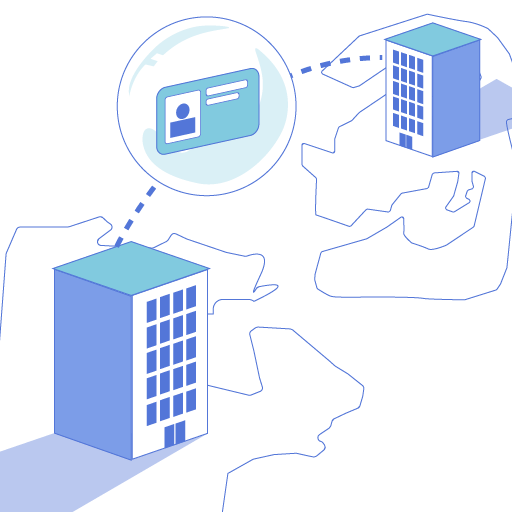
The result: global SaaS adoption and cross-border workflows with zero risk of violating data residency or exposing PII.
Every SaaS app, GenAI service, API call, or offshore team is a cross-border data transfer you don’t fully control. Each one increases your exposure to breaches, leaks, and non-compliance.
DataStealth was built for this reality.

Adopt any SaaS platform with confidence. We tokenize sensitive data in-flight, so vendors only ever process valueless tokens, not customer PII.

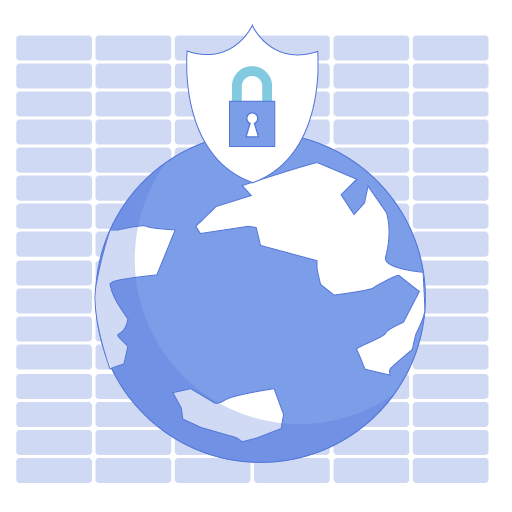
Guarantee that regulated data never leaves its jurisdiction. Our gateway neutralizes data before it crosses the border, ensuring compliance with GDPR, PIPEDA, HIPAA, and more.
Offshore and remote teams get the access they need, while dynamic masking ensures only the right people see real data, based on role, location, and context.
DataStealth operates transparently at the network layer, giving you total command of cross-border data flows without slowing down business.
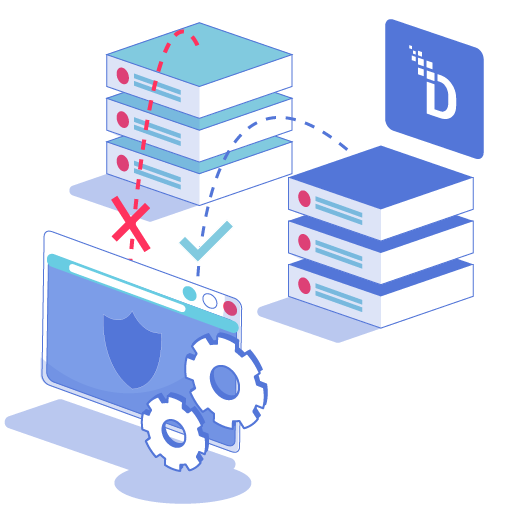
Protect any data flow with a simple network change. No agents to manage, no code to modify.
Apply granular rules to every flow: tokenize PII headed to cloud, mask it for offshore teams, or grant full access to local admins – all from one console.
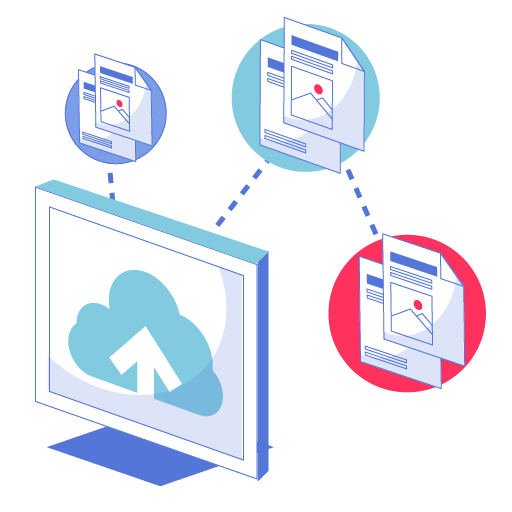

Neutralize sensitive data before it crosses any trust boundary, creating a provable, continuously enforced compliance posture.

A Canadian insurer was blocked from using U.S.-hosted Salesforce Marketing Cloud due to strict residency laws forbidding PII from leaving Canada.

DataStealth deployed in-line, intercepting all Canadian PII and replacing it with format-preserving tokens before it reached Salesforce’s U.S. servers.

The insurer launched Salesforce with full functionality, zero disruption, and 100% compliance, turning a residency barrier into a growth enabler.
Purpose-built for high-volume enterprise environments, DataStealth applies consistent, scalable protection across cloud, SaaS, and legacy systems.

Replace sensitive values with format-preserving tokens that have no mathematical link to the original data.

Hide or redact data dynamically based on user role, location, or IP, enforcing true least-privilege access.

Provision anonymized, high-fidelity test data for dev and QA teams worldwide, structurally consistent, but free of real PII..
Data residency refers to the legal requirement that certain categories of data – e.g., personal data under GDPR, health records under HIPAA, or customer information under PIPEDA – must be stored and processed within a specific geographic jurisdiction.
DataStealth enforces residency at the network layer. Sensitive data is tokenized in-flight before it leaves the jurisdiction – meaning the systems, SaaS platforms, and partner endpoints outside the border only ever receive valueless tokens that contain no exploitable PII.
This approach is fundamentally different from contract-based compliance – i.e., relying on vendor DPAs or Standard Contractual Clauses.
With DataStealth, residency is enforced by architecture, not by agreement. For a detailed breakdown, read Defining Data Privacy, Residency, and Sovereignty in the Cloud.
Traditional approaches to cross-border data transfer rely on legal mechanisms – adequacy decisions, binding corporate rules, or standard contractual clauses. These mechanisms are fragile – i.e., a single court ruling (like Schrems II) can invalidate them overnight.
In-line tokenization removes the legal dependency entirely. DataStealth intercepts data at the protocol layer and replaces PII, PHI, and PCI values with format-preserving tokens before the data crosses any boundary. The receiving system – whether a U.S.-hosted CRM, an offshore analytics team, or a cloud data warehouse – processes tokens that have no mathematical relationship to the original data.
Because no personal data actually crosses the border, the transfer falls outside the scope of most residency regulations. The case study with a Canadian insurer demonstrates this in practice – Salesforce Marketing Cloud operated at full functionality while zero real PII left Canada.
All three terms relate to where data can live – but they differ in scope and enforcement.
Data residency specifies where data must be stored – e.g., "Canadian customer data must reside in Canada." It's primarily a storage and processing location requirement.
Data sovereignty goes further – it means the data is subject to the laws of the country where it resides, and that the government of that country has legal jurisdiction over it. A data sovereignty requirement may prevent foreign governments from compelling access, even with a legal order from their own jurisdiction.
Data localization is the strictest form – it mandates that data cannot leave the country under any circumstances, including for backup, disaster recovery, or analytics. Russia, China, and India have localization requirements for certain data types.
DataStealth supports all three models by tokenizing data before it leaves the jurisdiction – ensuring that even if tokens flow across borders, no exploitable personal data does.
Yes – this is one of the most common deployment scenarios for DataStealth. Organizations in financial services, healthcare, insurance, and telecommunications frequently need to adopt U.S.-hosted SaaS platforms (Salesforce, ServiceNow, Workday, HubSpot) while complying with local residency requirements.
DataStealth deploys as an in-line gateway between your environment and the SaaS vendor. All sensitive data types – names, addresses, health records, payment card numbers, government IDs – are tokenized before they reach the vendor's servers. The SaaS application processes tokens as if they were real data, and no PII ever leaves the mandated jurisdiction.
For organizations managing hybrid or on-premise infrastructure alongside SaaS, the same tokenization policies apply consistently across all environments. Read SaaS Security: Protecting Sensitive Data for a broader context on third-party risk.

Get expert answers on how to deploy DataStealth at enterprise scale in your environment without performance trade-offs, code rewrites, or disruption.
SCHEDULE A CALL