← Return to Blog Home

Format-Preserving Encryption vs Tokenization: Understanding the Real Differences in Modern Data Protection

Ed Leavens

February 5, 2026

FPE, vaultless tokenization, and vaulted tokenization compared. Learn which method reduces PCI DSS scope, minimizes breach impact, and fits your architecture.

TL;DR

Format-preserving encryption (FPE), vaultless tokenization, and vaulted tokenization are three distinct approaches to protecting sensitive data, but they are not interchangeable. 

  • FPE encrypts data using algorithms like NIST FF1 while preserving the original format, but the output remains mathematically reversible with the encryption key.

  • Vaultless tokenization generates tokens algorithmically without a centralized vault, reducing operational overhead but offering weaker compliance guarantees.

  • Vaulted tokenization replaces sensitive data with random tokens that have no mathematical relationship to the original values, isolating real data in a secure vault. This is the only approach that physically removes sensitive data from production systems. 

For organizations focused on reducing PCI DSS scope, minimizing breach impact, and achieving regulatory clarity, vaulted tokenization offers a fundamentally different security posture.

As enterprise organizations modernize their data architectures, one question continues to surface in security, compliance, and engineering discussions: What is the right way to protect sensitive data while still keeping systems functional?

Three approaches are commonly considered today: format-preserving encryption (FPE), vaultless tokenization, and vaulted tokenization. 

While these methods are often grouped together, they differ significantly in how they work, the risks they introduce, and the compliance outcomes they support. Understanding these differences is critical, especially for organizations operating in regulated environments, such as financial services, among others.

Format-Preserving Encryption (FPE)

Format-Preserving Encryption is a cryptographic technique that encrypts sensitive data while preserving the original format. For example, a 16-digit credit card number remains 16 digits after encryption.

How It Works

FPE uses standardized cryptographic algorithms, such as NIST FF1 or FF3, to transform data using a secret key. The result is reversible and mathematically related to the original value.

Where FPE Fits Well

  • Legacy applications that cannot tolerate schema changes
  • High-performance use cases where simplicity matters
  • Environments where encryption keys are tightly controlled

Key Limitations

While FPE is convenient, it remains encryption, not true de-identification. If the encryption key is compromised, all protected data is exposed. Key rotation can also be operationally expensive, often requiring large-scale re-encryption of datasets.

From a compliance perspective, encrypted data is frequently still considered sensitive data in scope.

Vaultless Tokenization

Vaultless tokenization replaces sensitive data with tokens generated algorithmically, without storing the original values in a centralized vault.

How It Works

Tokens are created deterministically using cryptographic secrets. There is no stored lookup table. Reversibility depends on access to the underlying secrets rather than stored mappings.

Where Vaultless Tokenization Fits Well

  • Cloud native environments
  • Large-scale data pipelines
  • Use cases where eliminating centralized storage is a priority

Key Limitations

Because token generation relies on secrets, a compromise can allow token regeneration. Regulatory acceptance also varies, particularly in highly regulated industries. Managing collisions and ensuring long-term token stability can become challenging at scale.

Vaultless approaches reduce operational overhead, but they do not always reduce compliance scope in a meaningful way.

Vaulted Tokenization

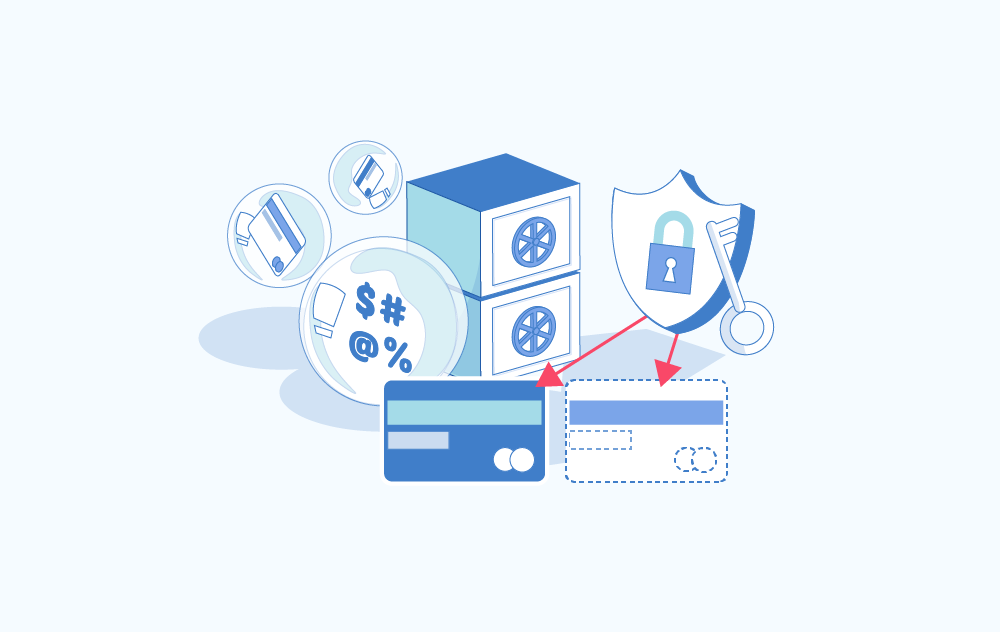
Vaulted tokenization replaces sensitive data with random tokens and stores the original values securely in a centralized vault. Tokens have no mathematical or cryptographic relationship to the original data.

How It Works

Sensitive data is isolated in a secure vault. Applications interact only with tokens. The mapping between tokens and original values is tightly controlled and segmented.

Where Vaulted Tokenization Fits Best

  • PCI DSS scope reduction
  • Highly regulated environments
  • Architectures focused on blast radius reduction
  • Zero trust and least privilege designs

Key Limitations

The vault becomes critical infrastructure and must be designed for availability, resilience, and performance. Poorly implemented vaults can introduce latency or operational complexity. When architected correctly, these challenges are manageable and outweighed by the security benefits.

Why These Differences Matter

While FPE and vaultless tokenization rely on cryptographic transformation, vaulted tokenization removes sensitive data entirely from most systems. This distinction has major implications for:

  • Breach impact
  • Audit scope
  • Regulatory interpretation
  • Long-term risk exposure

In many regulated environments, vaulted tokenization provides the clearest and strongest separation between sensitive data and the systems that use it.

Choosing the Right Approach

There is no one-size-fits-all answer. The right method depends on:

  • Regulatory requirements
  • Data sensitivity
  • Architecture maturity
  • Risk tolerance
  • Operational constraints

That said, as compliance pressure increases and architectures become more distributed, organizations are increasingly prioritizing approaches that minimize exposure by design, rather than relying solely on cryptographic protection.

Final Thoughts

FPE, vaultless tokenization, and vaulted tokenization each serve a purpose. The key is understanding what problem you are trying to solve.

If the goal is convenience and minimal change, encryption-based approaches may suffice. If the goal is reducing risk, scope, and blast radius in a meaningful and auditable way, vaulted tokenization offers a fundamentally different – and more resilient – security posture.

Modern data protection is no longer just about locking data. It is about where sensitive data lives, who can access it, and how much of your environment is exposed when something goes wrong.

Frequently Asked Questions (FAQ)

What is the difference between format-preserving encryption and tokenization?

Format-preserving encryption (FPE) transforms sensitive data using a cryptographic key while maintaining the original format. The output is mathematically reversible with that key. Tokenization replaces sensitive data with a random substitute that has no cryptographic relationship to the original. With vaulted tokenization, real data is isolated in a secure vault, and the token is meaningless on its own.

Is format-preserving encryption considered tokenization?

No. While both FPE and tokenization preserve the original data format, they differ technically. FPE produces ciphertext mathematically related to the plaintext through an encryption algorithm. Vaulted tokenization generates random substitutes with no derivable connection to the original value. Regulatory frameworks like PCI DSS treat encryption and tokenization differently when evaluating compliance scope reduction.

Does format-preserving encryption reduce PCI DSS scope?

FPE can satisfy PCI DSS encryption requirements, but it does not remove cardholder data from systems. Because FPE output is a reversible ciphertext, it is generally considered in-scope data. Vaulted tokenization achieves scope reduction more directly by replacing cardholder data with tokens that have no mathematical relationship to the original data, allowing systems that store tokens to fall outside the Cardholder Data Environment (CDE).

What happens if an encryption key is compromised in an FPE system?

If the encryption key is compromised, every data element encrypted with that key is exposed. An attacker with the key can decrypt all protected values, making the breach equivalent to plaintext exposure. Key rotation also requires re-encrypting all previously protected data. With vaulted tokenization, tokens are random values with no key to reverse them – compromising a token reveals nothing without also breaching the vault.

Is vaultless tokenization more secure than format-preserving encryption?

Vaultless tokenization eliminates the centralized vault by generating tokens algorithmically using cryptographic secrets. This reduces operational overhead compared to vault-based systems. However, if those secrets are compromised, an attacker can regenerate tokens and reverse the mapping. Vaultless tokenization sits between FPE and vaulted tokenization on the security spectrum – stronger than key-based encryption, but without the full data isolation of a vault.

Which data protection method is best for compliance?

The best method depends on the regulation and the required compliance outcome. For PCI DSS scope reduction, vaulted tokenization is the most effective approach because it physically removes cardholder data from application environments. For HIPAA, vaulted tokenization supports the de-identification of protected health information (PHI). FPE meets encryption mandates but typically does not reduce the compliance scope of systems that host encrypted data.

Can FPE and tokenization be used together?

Yes. Many organizations use a combination of data protection methods depending on data type and environment. FPE might protect specific fields in legacy systems where minimal disruption is critical, while vaulted tokenization secures cardholder data or personally identifiable information (PII) in production databases. A Data Security Platform (DSP) that supports tokenization, encryption, and masking enables organizations to apply the right method at the data-element level.

What is a Data Security Platform and how does it relate to tokenization?

A Data Security Platform (DSP) integrates data discovery, classification, and protection into a single platform. Rather than managing separate tools, a DSP unifies these capabilities so organizations can find sensitive data, classify it by risk level, and apply tokenization, encryption, or masking in accordance with policy. DSPs are central to the FPE-versus-tokenization discussion because they allow organizations to apply the right protection method without managing multiple point solutions.

About the Author:

Ed Leavens

Ed Leavens is co-founder and CEO at DataStealth.io and a cybersecurity innovator.