
AWS security best practices for IT leaders who own data security, IAM, and compliance across complex cloud environments.
If you run infrastructure at an enterprise, you already know this truth:
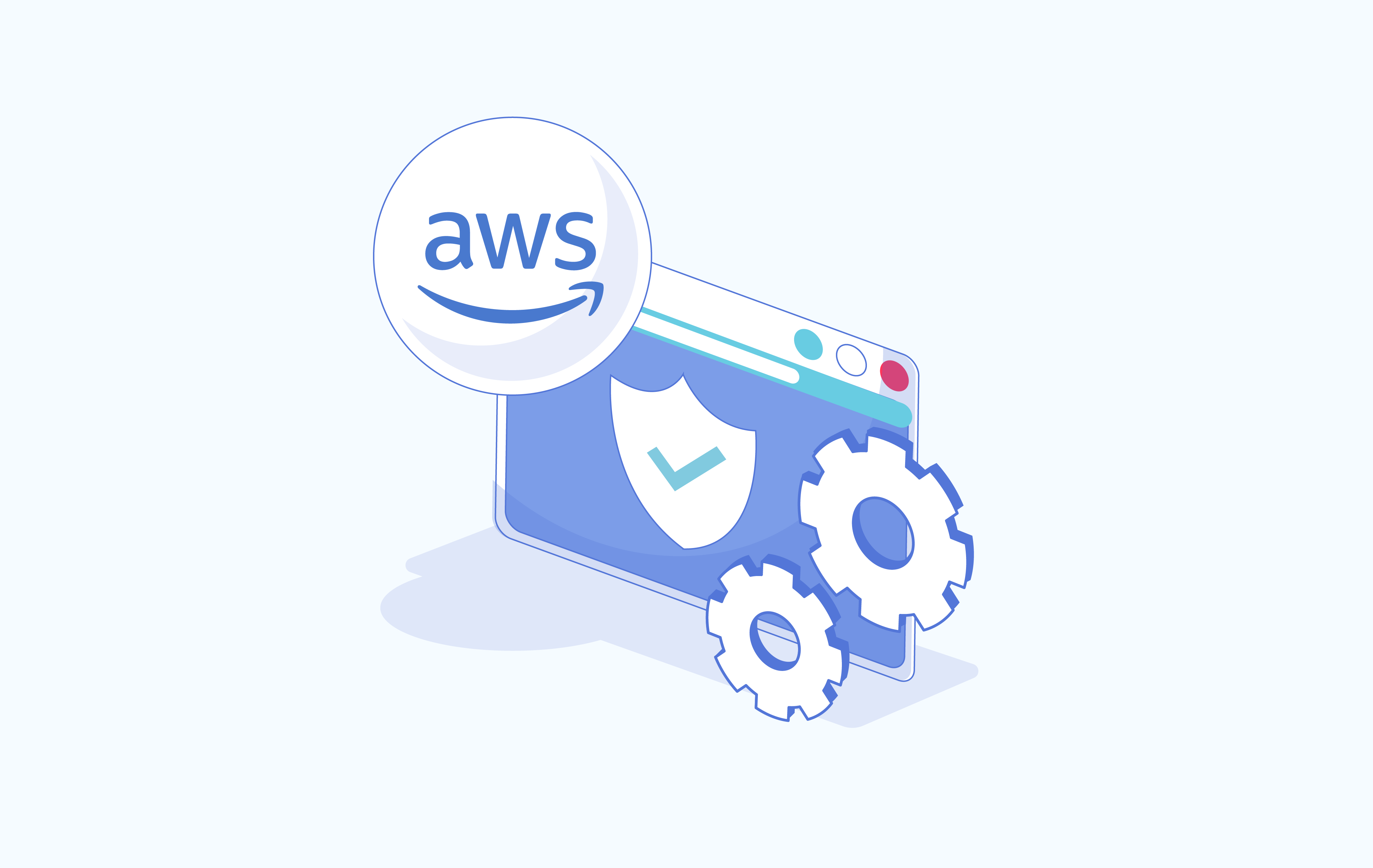
Amazon Web Services (AWS) secures the cloud. You secure what’s in it.
AWS invests heavily in hardened data centres, global networks, and managed services. That is their side of the AWS Shared Responsibility Model: cloud security.
Your side is more fragile and much more political.
You make the calls on identity and access management (IAM), VPCs, S3 bucket policies, and how sensitive data flows between cloud environments and legacy systems.
When AWS security best practices are followed, nobody notices. When they aren’t, you are the one explaining how a “temporary” test bucket turned into a front-page incident.
This article treats you as the operator in the middle of that tension. It looks at AWS Security Best Practices from your vantage point, then argues that the only way to win your side of the model is to think data-first, not tool-first.
A data-first view is what nudges people, eventually, toward a data security platform (DSP) like DataStealth – not because it is another box in a stack, but because it reinforces the strategy you already know you need.
Most vendor checklists agree on the mechanical side of AWS security best practices:
Useful, but incomplete.
At your scale, AWS cloud security best practices are less about memorizing services and more about holding a clear mental model:
Once you accept that frame, AWS security best practices stop being a static checklist and become a series of questions you can ask of any architecture, at any time.
When reviewing a new workload – whether it is a cloud-native app, a SaaS integration, or a migration from on-premises – AWS security can be distilled into four key questions.
This is the familiar territory: roles, policies, and multi-factor authentication (MFA).
AWS documentation and guidance all elevate least privilege as a core control. However, your question is much sharper:
A data-centric mindset adds one more layer: even when IAM says “allow,” what exactly should that person see? DataStealth’s dynamic data masking and tokenization approach is an example of how that data-layer question gets answered, but the principle stands regardless of vendor.
Many AWS security guides warn about broad network exposure, public S3 buckets, and overly permissive security groups. These are all, again, valid, but your operational lens also requires you to ask:
Again, a data-first view adds nuance: not every surface is equal. An internal analytics tool with cleartext customer data deserves more scrutiny than a stateless marketing API returning cached content.
This is where most AWS security best practices guidance goes thin. You already encrypt S3, RDS, and EBS and lean on KMS with customer-managed keys. You enforce encrypting data at rest and in transit with TLS across load balances and services.
Yet breaches keep coming from:
Therefore, the question shifts from “are we using KMS” to “if an attacker gains access, how much sensitive data would they actually read before we contain them?”
That question is what ultimately justifies dedicated data security tools, especially those that sit above the infrastructure tier (like DataStealth).
AWS security guidance all stress regular reviews, continuous monitoring, and configuration baselines. However, from your perspective, the key questions to ask are:
This is where discovery and classification engines – including ones embedded in platforms like DataStealth – start to look less like “extras” and more like preconditions for robust AWS security initiatives.
Traditional cloud security talks about EC2, S3, and VPCs. A more durable AWS cloud security posture begins with identifying which systems actually hold regulated or business-critical data. In fact, dark data and shadow data – the things nobody planned for – must be part of the map.
IAM is robust, but its real value lies in describing how work is done, not how servers are named. Least privilege is easier to enforce when policies align with real business responsibilities, and access control decisions can be clearly explained to auditors.
Even if you have cloud-native controls, logging, and GuardDuty, some exports, backups, or screenshots will still escape. A data-centric mindset that assumes “zero exfiltration” is a fantasy. Designing so that exfiltrated data is tokenized, masked, or split changes the math in that even if something leaks, it’s not in a readable or usable format.
The specifics of key management service KMS can change, but the principle holds: keys should have clear owners, lifecycles, and blast radii. Whether you keep everything in AWS KMS or use a layered approach with a platform like DataStealth, the outcome should be predictable key governance – not a handful of “magic” CMKs nobody wants to rotate.
Dev, test, and UAT are where AWS Security Best Practices often fail. Real data ends up in places with weaker controls. Thinking deliberately about protecting data in DevOps and UAT environments is just as important as securing production environments.
This kind of checklist doesn’t discard AWS guidance. It reorganizes it around the thing that actually damages you when it escapes: the data.
You’re not just dealing with AWS environments. You inherit mergers with their own clouds, SaaS solutions with their own controls, and internal systems that will never be moved off mainframes or old databases. You need to unify efforts across on-prem and multi-cloud estates.
This means that any credible AWS security program must be multi-cloud and hybrid-focused:
This is where the value of a data-centric layer – again, something in the mould of DataStealth – becomes conceptual, not just technical:
See our resources on SaaS security, protecting sensitive data in SaaS applications, and multi-cloud security guide for more targeted guidance.
When auditors arrive, they ask whether your AWS security practices show up as controls, logs, and consistent behaviour across time. AWS itself frames its security whitepaper around helping you define an information security management system (ISMS) for the cloud.
From your standpoint, AWS security compliance comes down to three questions:
This is why platforms that focus on discovery, classification, and control of sensitive data – like DataStealth – end up in board decks: they give you a factual way to talk about where your risk really sits, not just how many rules your WAF enforces.
If you strip away vendor names and product SKUs, the emerging trends are clear:
Seen through that lens, a data-centric platform is less a “nice-to-have” product and more the natural extension of the AWS Security Best Practices thinking you already apply every day.
The cloud will keep changing. The Shared Responsibility Model will not. Your side is the one that decides whether, when something breaks, attackers find raw records – or just carefully controlled fragments that can’t hurt you.

Bilal is the Content Strategist at DataStealth. He's a recognized defence and security analyst who's researching the growing importance of cybersecurity and data protection in enterprise-sized organizations.