
Data residency for energy companies: stop choosing between compliance and cloud adoption. Tokenization strategies that protect data without blocking tools.
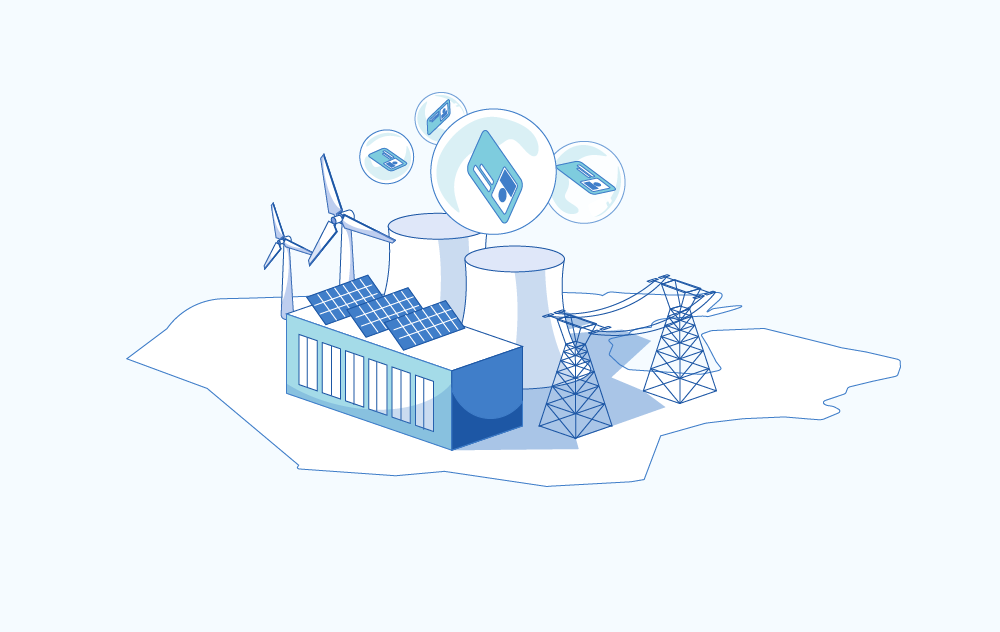
Data residency is the physical location where an organization's data is stored and processed.
For energy and resource companies, data residency matters due to strict regulatory requirements, national security concerns regarding critical infrastructure, and the protection of proprietary assets, such as well sites and geological data.
Energy enterprises face a paradox: they must keep sensitive data within national borders while adopting global software-as-a-service (SaaS) platforms to remain competitive.
The solution lies in deploying data protection technologies, such as tokenization, that keep sensitive data resident while enabling global cloud functionality.
This approach allows organizations to prepare for incoming General Data Protection Regulation (GDPR)-equivalent legislation while maintaining operational efficiency across international subsidiaries.
Data residency is the physical and geographical location where an organization's data is stored and processed. It is a business or regulatory requirement that requires data to remain within the borders of a specific country or region.
When an energy company chooses a cloud provider, it selects a "region" for its data to reside in.
However, maintaining strict residency becomes difficult in complex global SaaS environments because backup servers, support teams, and third-party processors may operate in different jurisdictions.
Data residency encompasses three core characteristics:
Energy and resource organizations manage critical national infrastructure. The data they generate – from grid operational metrics to land survey results and well site coordinates – often carries national security implications that extend beyond standard privacy concerns.
Energy grids, pipelines, and mining operations are classified as critical infrastructure in most nations. Governments mandate that data related to these assets remain within national borders to prevent foreign surveillance or interference.
If operational data flows through foreign servers, it may be subject to interception or subpoena by foreign governments. This poses a direct risk to national energy security that regulators take seriously.
Resource companies invest billions in exploration and extraction technologies. Geological survey data, proprietary extraction methods, and well site locations are high-value targets for industrial espionage.
Keeping this data resident in a trusted jurisdiction under strict data protection protocols minimizes the risk of theft during cross-border transfers.
The energy sector operates under heavy regulation.
Beyond standard privacy laws like the California Consumer Privacy Act (CCPA), energy companies must comply with industry-specific standards such as the North American Electric Reliability Corporation Critical Infrastructure Protection (NERC CIP) requirements.
Many Canadian energy companies are now actively preparing for GDPR-equivalent legislation.
Overall, violating data residency requirements can result in massive fines, loss of operating licenses, and reputational damage.
While often used interchangeably, data residency and data sovereignty are distinct concepts with different legal implications.
Data sovereignty is the legal consequence of data residency. Just because data resides in a country does not mean it is safe from foreign laws, especially if the cloud provider is headquartered elsewhere.
Most leading SaaS platforms – Salesforce, ServiceNow, Microsoft 365 – operate globally. Even when a vendor offers a "local" data center, specific features or backups may still route data through other countries.
For energy companies, this creates a compliance gap in which using modern tools inadvertently violates residency laws. The business units need these tools for productivity, but security and compliance teams must enforce data boundaries.
Before protecting data, organizations must know what they have and where it lives. This presents a significant challenge for large energy enterprises with decades of accumulated information.
This discovery challenge is compounded by shadow IT, where different business units adopt cloud tools without central IT approval. These unsanctioned data flows create invisible channels where sensitive information leaves the country of origin.
Energy companies often possess decades of archival data stored in legacy systems, including mainframes and on-premises file servers. What was once considered the company's greatest asset has become a significant liability.
Migrating this data to hybrid environments or full cloud architectures requires careful discovery and classification. Without robust data discovery capabilities, organizations risk unknowingly moving sensitive data to non-compliant regions.
Energy companies manage uniquely sensitive data types. Land systems containing mineral rights, surface agreements, and property owner information often hold the most personally identifiable information within these organizations.
This data intersects business operations with privacy regulations, requiring specialized handling approaches.
Energy companies often employ three main strategies to handle data residency requirements.
The most direct approach is to use cloud providers with physical data centers within the required jurisdiction.
Companies can rely on legal contracts, such as Standard Contractual Clauses (SCCs) or Binding Corporate Rules (BCRs), to legally justify cross-border data transfers.
This strategy replaces sensitive data with random tokens before it leaves the residency boundary. The actual sensitive data stays in a local vault while the cloud application processes the tokens.
For energy companies, the technical isolation strategy often provides the best balance between compliance and innovation.
Energy companies face a commonly overlooked residency challenge in their development environments. Development teams frequently copy production databases to test environments without applying adequate protection.
This practice creates significant risk. Production data containing PII, proprietary operational details, and sensitive business information lands in less-protected non-production environments – and potentially in jurisdictions that violate residency requirements.
Every developer claims they need real data for testing. They cite requirements for building test cases, validating integrations, and ensuring production-equivalent functionality.
The solution applies protection policies as data moves from production to non-production environments in real-time. Sensitive fields are transformed into format-preserving tokens that maintain analytical integrity without exposing the actual data.
If Jason Ross's name becomes "Steve Smith" (a different five-letter name), downstream systems continue to work normally. Developers see realistic data that validates their code while the organization de-risks its entire non-production landscape.
Production data contains relationships. If Jason Ross has family members listed as dependents in related tables, changing his last name without updating related records breaks reporting in non-production environments.
Sophisticated tokenization maintains these relationships. When Jason Ross becomes Steve Smith, all related records are updated consistently across tables, preserving the referential integrity developers need for realistic testing.
Energy companies frequently evaluate new technologies before formal procurement. These proof-of-concept projects traditionally require sharing sensitive data with vendors who may not yet have approved security postures.
Data protection technologies enable a "try before you trust" approach. Companies can evaluate third-party tools using tokenized data that maintains functional utility without exposing sensitive information.
This approach opens evaluation opportunities while maintaining compliance. Once functionality is validated, procurement and security teams can complete their standard approval processes before enabling real data access.
Energy companies with international operations face jurisdiction-specific compliance requirements. Data that can flow freely within Canada may require special handling when subsidiaries operate in other regulatory zones.
Energy companies regularly submit information to government entities, regulators, and industry oversight bodies. This creates recurring data handling challenges.
Automated redaction ensures consistent protection across these submissions while maintaining the underlying data for internal use.
GDPR-style privacy regulations include provisions like the right to be forgotten – an individual's ability to request deletion of their personal information. Canadian energy companies anticipate similar requirements in upcoming domestic legislation.
Traditional discovery and classification tools identify data categories. They can tag a database as "containing Social Insurance Numbers (SINs)." But privacy compliance requires something more granular.
This granular classification connects specific data elements to specific individuals, enabling compliance with individual privacy requests at scale.
Energy companies deal with operational data that requires near-real-time processing. Grid monitoring, pipeline sensors, and production systems cannot tolerate significant latency.
Solutions operating as transparent network proxies generally offer better performance than API-based encryption gateways. When evaluating data protection solutions, measure impact on time-sensitive workflows before deployment.
Not all data requires the same level of protection. A "sledgehammer" approach that blocks all cloud traffic stifles productivity without adding proportional security benefit.
Effective solutions offer field-level policy control. You can tokenize employee SINs and specific well site coordinates while allowing non-sensitive operational metrics to flow freely to cloud analytics platforms.
Many data residency scenarios require bidirectional data flow. Users need to view protected records, not just submit them.
Tokenization enables the local gateway to swap tokens back into the original data in real time for authorized users. This maintains a seamless user experience while protecting against unauthorized access and storage.
Not every dataset requires strict residency controls. Prioritize these solutions in specific scenarios.
Adopt data residency solutions when you need to:

Bilal is the Content Strategist at DataStealth. He's a recognized defence and security analyst who's researching the growing importance of cybersecurity and data protection in enterprise-sized organizations.