

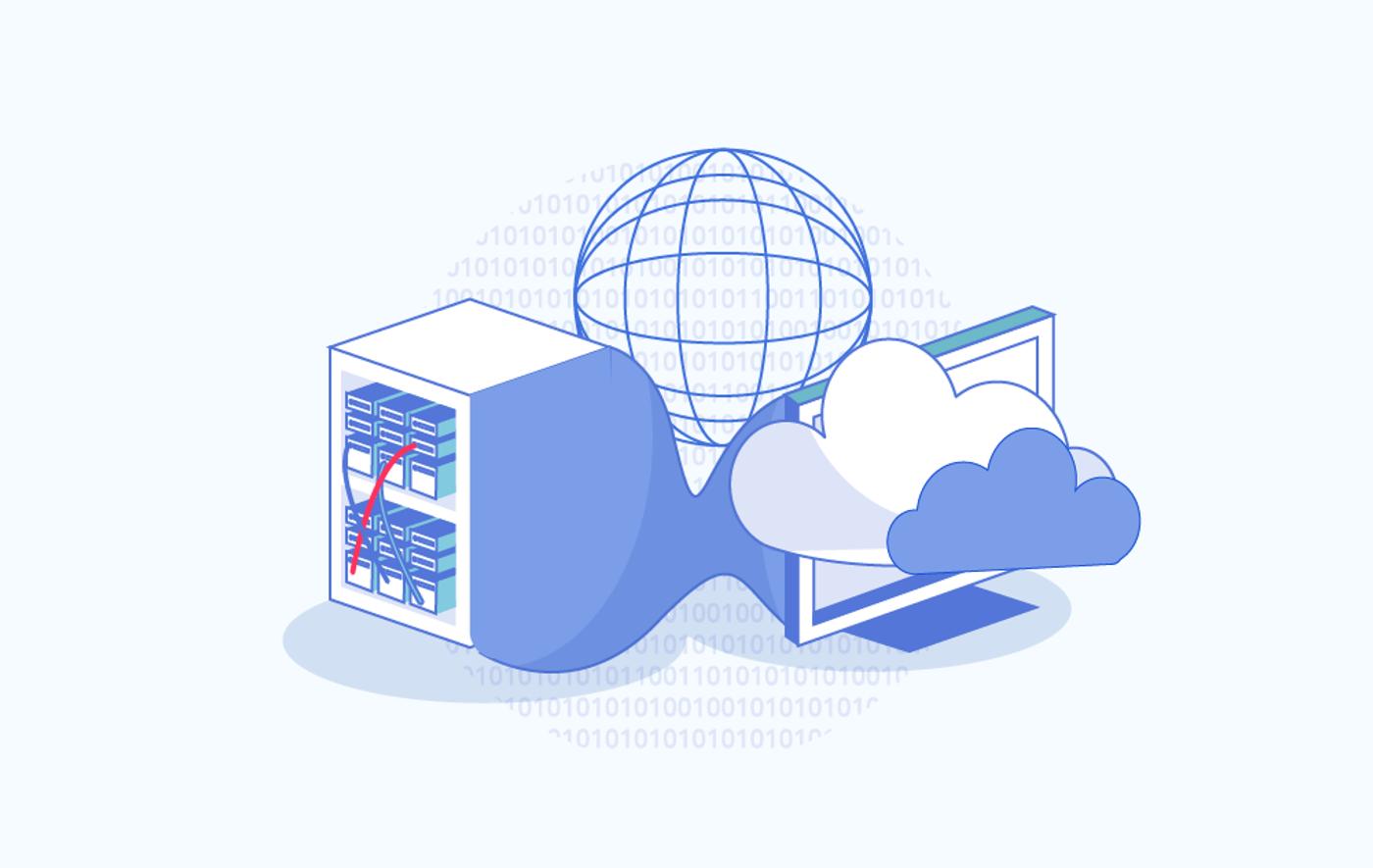
Modern enterprises are no longer asking if they should move from mainframe to cloud. The question is how to do it without breaking security, compliance, or mission-critical uptime.
Mainframes still run payment rails, trading platforms, core banking, insurance policy systems, healthcare claims, and government records. At the same time, cloud platforms power new analytics, AI, customer experiences, and developer workflows. Hybrid IT has become the “pragmatic target operating model” for organizations that must balance agility with uncompromising reliability and compliance.
This article focuses on one specific problem: How to build secure mainframe-to-cloud data pipelines that continuously move and transform sensitive data, without exposing it along the way.
We’ll also show where the DataStealth platform fits as an agentless, data-centric layer that protects sensitive information everywhere it flows.
Why Mainframe Data is Moving from Mainframe to Cloud
Drivers for Modernization: Agility, Analytics, and Cost
Most organizations are not ripping out mainframes. They are:
- Keeping core mainframe workloads in place for reliability and transaction throughput.
- Using the cloud environment for analytics, AI/ML, customer-facing apps, APIs, and partner integrations.
Key drivers:
- Analytics & AI: Data from IBM Z and other mainframe systems feeds fraud detection, personalization, and risk models living in the cloud.
- Developer velocity: Cloud-native services and CI/CD pipelines move faster than traditional mainframe change cycles.
- Cost & flexibility: Cloud can be cheaper for bursty or exploratory workloads, while mainframes remain efficient for sustained, high-volume transaction processing.
In practice, mainframe modernization to cloud usually means coexistence: the mainframe remains the system of record, while cloud applications and data platforms consume, enrich, and analyze its data.
Security Challenges in Mainframe to Cloud Migration Data Pipelines
When you build continuous pipelines rather than one-time copies, security risks compound. You’re not just migrating mainframe to cloud once — you’re creating a persistent bridge that attackers will try to exploit.
Data Exposure Risks: In Transit, At Rest, and In Use
For any mainframe to cloud migration, you have three attack surfaces:
- In transit: Data moving over network links (VPN, Direct Connect, private links, APIs, message buses).
- At rest: Data stored in cloud buckets, data lakes, warehouses, caches, and intermediate staging.
- In use: Data processed inside ETL/ELT jobs, streams, Spark clusters, and AI/ML pipelines.
Cloud providers emphasize encryption and access controls on storage services like Amazon S3, EFS, and managed databases, but you are still responsible for how data leaves IBM z/OS and how it’s transformed in each cloud platform.
Integrity and Consistency Across Environments
When mainframe applications remain the system of record, but your analytics and APIs live in the cloud, you must ensure:
- No silent corruption as data moves from EBCDIC / packed decimals to UTF-8 / JSON.
- No partial updates or “split-brain” scenarios between mainframe datasets and cloud replicas.
- Strong lineage to prove how a value in the cloud was derived from mainframe data.
Compliance and Regulatory Constraints
Mainframes often store data regulated by PCI DSS, HIPAA, GDPR, and local data residency laws. When you move mainframe to cloud or stream data out in real time, you extend your compliance scope to new services and regions.
Regulators increasingly expect:
- Encryption and/or tokenization of sensitive fields.
- Fine-grained access controls and auditable logs for every data touch.
- Clear understanding of which country/region data (or surrogates) physically resides in.
For a deeper dive into these regulatory pressures on mainframe estates, see DataStealth’s Mainframe Security Solutions – Complete Guide for 2025.
Legacy Protocols, Formats, and Skills
Mainframe data is locked in:
- VSAM files, Db2 for z/OS, IMS, and other specialized stores.
- TN3270, MQ, batch JCL, and home-grown integrations.
Bridging this to event streams, REST APIs, and cloud warehouses introduces protocol translation, data transformation, and orchestration — each a potential security weak point if not designed carefully.
Core Pillars of a Secure Mainframe-to-Cloud Data Pipeline Strategy
To secure mainframe-to-cloud data integration, you need more than VPNs and storage encryption. Think in terms of data-centric security that travels with the data.
Robust Encryption: Protecting Data Throughout its Journey
In transit:
- TLS on all links that carry mainframe workloads into your cloud environment (API gateways, Kafka, CDC tools, SFTP, message queues).
- Strict certificate management and mutual TLS between mainframe and cloud endpoints.
At rest:
- Native encryption for cloud object storage, relational databases, and data lakes.
- Mainframe dataset encryption for Db2, VSAM, and other critical stores.
In use:
- Where possible, keep certain fields tokenized or masked even during processing.
- For highly sensitive scenarios, explore confidential computing or enclaves in the cloud.
DataStealth adds a layer here by tokenizing or masking sensitive values at the edge — before they leave the mainframe — so downstream systems only ever see surrogates.
Granular Access Control, Zero Trust, and Identity
As you expand pipelines, more identities and services gain potential access to mainframe-sourced data:
- Cloud IAM roles, service accounts, and federation with enterprise IdPs.
- Mainframe access controls (RACF, ACF2, Top Secret).
- Integration tools, streaming platforms, ETL engines.
A secure mainframe to cloud migration strategy should:
- Apply least privilege to every data store and service.
- Use MFA for administrators and pipeline operators.
- Adopt a Zero Trust model where each access is continuously evaluated, not blindly trusted based on network location.
DataStealth’s approach aligns with this by operating at the network/DNS layer, inserting controls inline without agents or code changes, so it can enforce policies consistently across hybrid paths.
Maintaining Data Integrity and Quality
Security isn’t just confidentiality. Integrity is crucial when your fraud models, risk analytics, or regulatory reports rely on the data:
- Use checksums, hashes, and row-level validation between mainframe and cloud replicas.
- Maintain data lineage: which pipeline, version, and transformation produced which dataset.
- Treat “data quality checks” as security controls — bad or unexpected data can signal tampering or misconfiguration.
Continuous Monitoring and Threat Detection
Finally, treat pipelines as living systems:
- Feed pipeline logs, access logs, and data access events into your SIEM.
- Watch for anomalous data volumes, unusual destination buckets, or off-hours access.
- Correlate mainframe security events (e.g., RACF violations) with cloud incidents.
Mainframe-aware security tools and modern platforms like DataStealth’s data security platform help centralize this view across on-prem, cloud, and hybrid environments.
Architectural Patterns for Secure Mainframe Migration to Cloud Pipelines
Hybrid Mainframe to Cloud Migration Strategy
Most organizations adopt a hybrid strategy rather than a single “big bang” move from mainframe to cloud:
- Coexistence architectures where the mainframe remains the system of record, and cloud hosts analytics and new digital experiences.
- Incremental replatforming or refactoring of selected mainframe applications, while others stay on IBM Z or similar systems.
- API-led integration using gateways, z/OS Connect, or vendor platforms to expose mainframe logic safely to cloud services.
Security design must match this reality: your “migration” is really a long-lived integration pattern.
Real-Time Streaming and CDC Pipelines
For real-time mainframe data to cloud security, many teams use:
- Change Data Capture (CDC) tools to stream Db2 for z/OS, IMS, or VSAM updates into Kafka, Kinesis, Pub/Sub, etc.
- Event-driven architectures where customer events, transactions, and logs from mainframe workloads feed cloud analytics and AI.
Risks:
- Leaks via misconfigured topics or subscriptions.
- Over-broad access to raw streams.
- Sensitive payloads copied into dev/test environments.
Mitigations:
- Tokenize or mask sensitive fields before streaming.
- Use separate topics for sensitive vs non-sensitive data.
- Apply strict ACLs on topics and consumer groups.
This is where agentless mainframe data protection becomes powerful — by injecting tokenization at the edge rather than rewriting every consumer.
Secure Batch Data Transfer and ETL/ELT
Not every pipeline must be real-time. Many mainframe to cloud migration efforts still rely on:
- Encrypted SFTP/FTPS jobs.
- Nightly batch extracts and ETL/ELT into cloud warehouses.
Best practices:
- Apply data masking and tokenization to high-risk fields in the extract step.
- Separate keys and token vaults from cloud compute accounts.
- Automate checks that confirm file completeness and expected record counts.
Best Practices for Moving Mainframe Applications to Cloud Securely
Even if you are not fully moving mainframe applications to cloud, the following patterns apply whenever application logic or data is split across environments.
1. Start with a Security & Data Assessment
- Map which datasets, tables, fields, and message types are truly sensitive.
- Identify where those fields appear in mainframe workloads, batch jobs, and APIs.
- Document where they must go in the cloud environment (data lakes, warehouses, microservices, AI pipelines).
This is where a data discovery and classification capability (built into a data security platform) accelerates work and keeps you from missing legacy fields that still contain PII or cardholder data.
2. Design Security Into the Mainframe Migration to Cloud
Treat mainframe migration to cloud as a security design exercise, not just a refactoring project:
- Decide which controls will be enforced at the data layer (tokenization, masking, encryption).
- Decide which will be enforced at the network/DNS layer (like DataStealth’s in-line deployment model).
- Decide which will be enforced at the application layer (fine-grained authorization, API scopes).
If you don’t design this up front, you’ll end up bolting on tools per project, creating blind spots and inconsistent policies.
3. Use Agentless Controls Where Possible
Agents on IBM Z OS and other mainframe platforms introduce operational risks, performance concerns, and change-control friction. That’s why DataStealth takes an agentless, inline approach: drop the platform in via a network/DNS change, and it begins protecting data in motion, including legacy protocols and mainframe applications, without code changes.
This is especially valuable when:
- Skill shortages make it hard to modify COBOL or PL/I code.
- You can’t install agents on regulated or heavily controlled LPARs.
- You need to protect dozens or hundreds of applications consistently.
4. Treat Hybrid as the Default, Not a Temporary State
Vendors sometimes talk as if the mainframe will be turned off after three years of refactoring. In reality, many organizations:
- Keep core systems on mainframe for the long term.
- Use mainframe modernization patterns to connect them to cloud-native apps.
This is exactly the scenario where a hybrid data security architecture matters.
How DataStealth Secures Mainframe-to-Cloud Data Pipelines
Most “mainframe to cloud” guides focus on frameworks, refactoring strategies, or cloud services. They rarely answer the question: How do we enforce consistent, data-centric security across mainframe, network, and cloud without rewriting everything?
DataStealth addresses this with a platform-level approach:
- Agentless, Inline Deployment
Inserted via a simple DNS or network routing change.
No agents on mainframes, app servers, or cloud workloads.
Ideal for sensitive and regulated environments where you can’t modify IBM Z OS or legacy transaction code.
- Inserted via a simple DNS or network routing change.
- No agents on mainframes, app servers, or cloud workloads.
- Ideal for sensitive and regulated environments where you can’t modify IBM Z OS or legacy transaction code.
- Tokenization and Dynamic Masking for Pipelines
Tokenize sensitive values (PANs, account numbers, identifiers, PHI) as they leave the mainframe.
Downstream cloud services only see surrogates, drastically reducing breach and compliance impact.
Different views (masked vs clear) can be enforced per user, per application, or per environment.
For more on this approach, see DataStealth’s Data Tokenization Solutions.
- Tokenize sensitive values (PANs, account numbers, identifiers, PHI) as they leave the mainframe.
- Downstream cloud services only see surrogates, drastically reducing breach and compliance impact.
- Different views (masked vs clear) can be enforced per user, per application, or per environment.
- For more on this approach, see DataStealth’s Data Tokenization Solutions.
- Unified Data Security Platform Across Mainframe, Legacy, and Cloud
The DataStealth platform:
- Discovers, classifies, and protects sensitive data across on-premise, cloud, and hybrid environments.
- Applies encryption, masking, and tokenization consistently — regardless of where mainframe-sourced data ends up.
- Integrates with existing SIEM, IAM, and security operations workflows instead of replacing them.
- Support for Real-World Migration & Modernization Paths
Whether you are:
- Keeping mainframe as the system of record and streaming to cloud.
- Rehosting or replatforming some mainframe applications.
- Building new cloud-native front ends on top of mainframe APIs.
DataStealth helps you decouple security from the migration path, so you can change architectures without redesigning protection on every project.
The Future of Mainframe to Cloud Data Pipelines: AI, Zero Trust, and Quantum-Safe Crypto
Mainframes are evolving, not disappearing. New IBM Z generations are explicitly designed for AI, hybrid cloud, and advanced security, including quantum-safe cryptography and AI-driven sensitive data tagging.
That evolution will only increase the value of mainframe data in:
- Real-time fraud detection and anomaly detection.
- AI-driven customer experience and operational intelligence.
- High-frequency risk analytics and regulatory reporting.
As a result:
- Pipelines become permanent infrastructure, not one-off projects.
- Zero Trust for data flows becomes mandatory, not optional.
- Data-centric controls — tokenization, masking, encryption-in-motion — become the main way to keep up with new use cases without re-auditing every application.
Conclusion: Mainframe to Cloud Without Losing Control of Your Data
If you’re building secure mainframe-to-cloud data pipelines, you are solving a more complex problem than a simple migration:
- You must protect data in transit, at rest, and in use across two very different worlds.
- You must keep regulators satisfied while unlocking new analytics, AI, and digital experiences.
- You must support hybrid architectures in which your mainframe and cloud environments coexist for years.
Cloud providers give you strong building blocks. But they don’t automatically secure how data leaves your mainframe or how it flows through your pipelines.
That’s where a data-centric, agentless platform like DataStealth becomes essential — inserting protection at the data layer and network layer so that every mainframe to cloud migration, integration, and modernization initiative starts from a position of security.
If you’re planning your next wave of mainframe to cloud migration projects, start by designing secure data pipelines and then choosing the right migration patterns on top — not the other way around.
17. What’s the fastest and safest way to secure a mainframe-to-cloud pipeline today?
Use a data-centric, agentless platform that:
- Protects data before it leaves the mainframe
- Applies tokenization/masking across all pipelines
- Works without modifying COBOL, JCL, APIs, or cloud applications
- Enforces consistent security across hybrid paths
- Centralizes compliance for PCI, HIPAA, GDPR
This is exactly the model used by the DataStealth Platform.
Lindsay Kleuskens is a data security specialist helping enterprises reduce risk and simplify compliance. At DataStealth, she supports large organizations in protecting sensitive data by default, without interrupting user workflows.
Connect on LinkedIn →